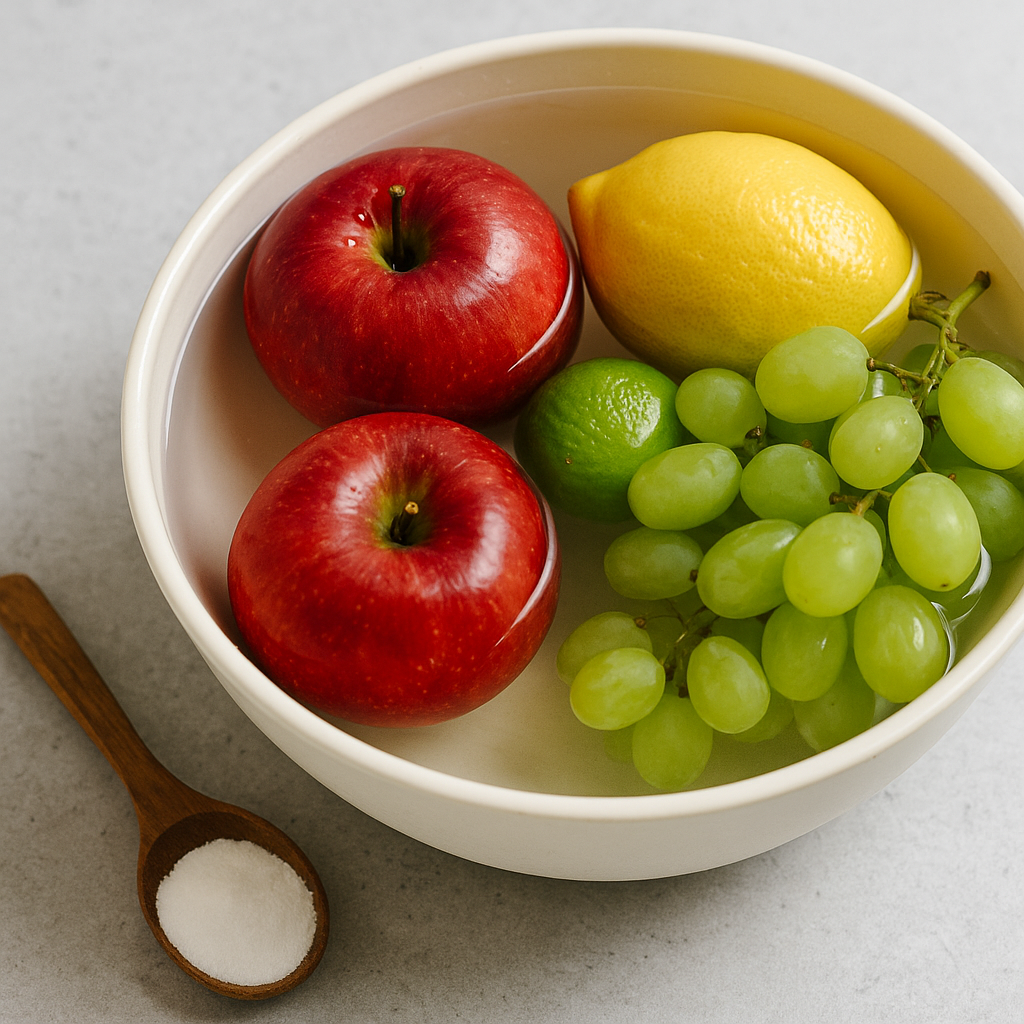
- Fruits and veggies often carry pesticide residues and heavy metals.
- A quick rinse with plain water won’t cut it.
- Baking soda breaks down and lifts off residues.
2. Step-by-Step Guide
- Add 1–2 teaspoons of baking soda to 1 quart of water.
- Soak produce for 15–20 minutes.
- Rinse with clean water.
👉 Tip: For delicate berries, shorten soak time to 5–10 minutes.
3. Benefits
- Affordable, safe, and proven.
- Science shows baking soda outperforms vinegar or water.
- Extra use: clean cutting boards & kitchen tools naturally.
- 📘 Note: This freebie is bilingual (German & English).
- 👉 That way, you’re not only protecting your health – you’re also picking up some extra language skills.

📘 Dein exklusiver Freebie-Download
- ✔ Zweisprachig (Deutsch & Englisch)
- ✔ Wissenschaftlich bewährt & leicht anwendbar
- ✔ 100% kostenlos & sofort verfügbar
🔒 Sicherer Download – keine versteckten Kosten
1. Why Baking Soda?
Fruits and veggies often carry pesticide residues and heavy metals.
A quick rinse with plain water won’t cut it.
Baking soda breaks down and lifts off residues.
2. Step-by-Step Guide
Add 1–2 teaspoons of baking soda to 1 quart of water.
Soak produce for 15–20 minutes.
Rinse with clean water.
👉 Tip: For delicate berries, shorten soak time to 5–10 minutes.
3. Benefits
Affordable, safe, and proven.
Science shows baking soda outperforms vinegar or water.
Extra use: clean cutting boards & kitchen tools naturally.
Abschluss
Call-to-Action:
DE: „Probier es selbst aus – und genieße deine Lebensmittel ohne Sorgen.“
EN: „Try it out – and enjoy your food without worry.“
Abschluss
- Call-to-Action:
- DE: „Probier es selbst aus – und genieße deine Lebensmittel ohne Sorgen.“
- EN: „Try it out – and enjoy your food without worry.“